
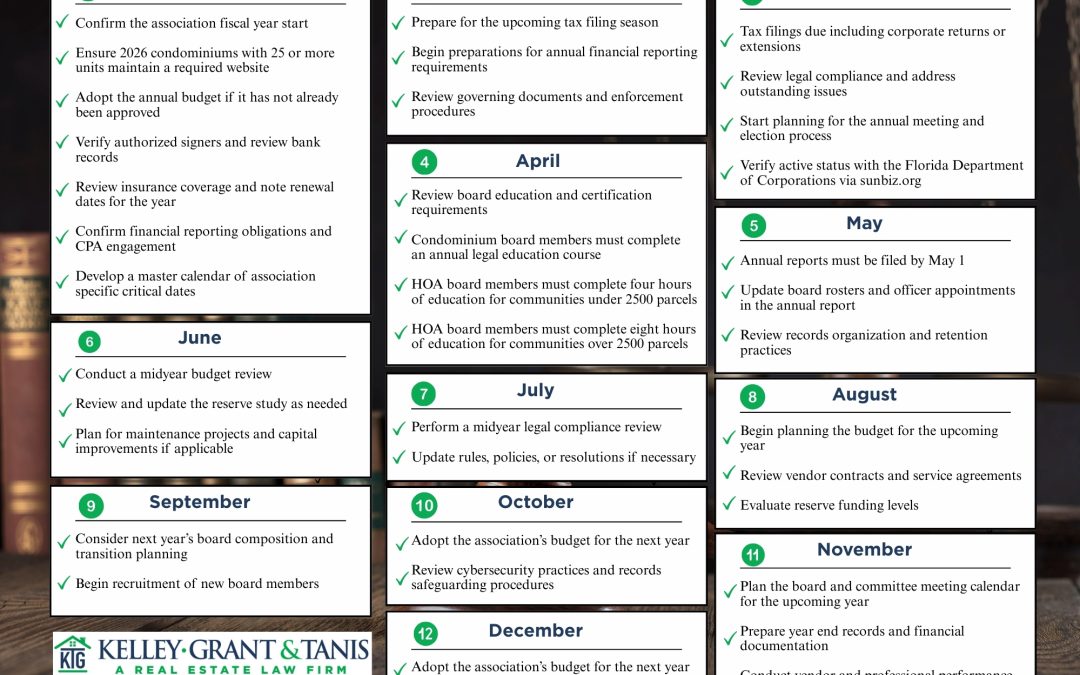
Effective association governance requires consistent planning, timely compliance, and proactive decision making throughout the year. This 2026 Association Planning Calendar provides a month by month overview of key financial, legal, operational, and governance responsibilities for condominium and homeowners associations. By following this structured timeline, boards and managers can stay organized, meet statutory requirements, reduce risk, and position their communities for long term stability and success.
Download the 2026 Calendar (PDF)January
- Confirm the association fiscal year start
- Ensure 2026 condominiums with 25 or more units maintain a required website
- Adopt the annual budget if it has not already been approved
- Verify authorized signers and review bank records
- Review insurance coverage and note renewal dates for the year
- Confirm financial reporting obligations and CPA engagement
- Develop a master calendar of association specific critical dates
February
- Prepare for the upcoming tax filing season
- Begin preparations for annual financial reporting requirements
- Review governing documents and enforcement procedures
March
- Tax filings due including corporate returns or extensions
- Review legal compliance and address outstanding issues
- Start planning for the annual meeting and election process
- Verify active status with the Florida Department of Corporations via sunbiz.org
April
- Review board education and certification requirements
- Condominium board members must complete an annual legal education course
- HOA board members must complete four hours of education for communities under 2500 parcels
- HOA board members must complete eight hours of education for communities over 2500 parcels
May
- Annual reports must be filed by May 1
- Update board rosters and officer appointments in the annual report
- Review records organization and retention practices
June
- Conduct a midyear budget review
- Review and update the reserve study as needed
- Plan for maintenance projects and capital improvements if applicable
July
- Perform a midyear legal compliance review
- Update rules, policies, or resolutions if necessary
August
- Begin planning the budget for the upcoming year
- Review vendor contracts and service agreements
- Evaluate reserve funding levels
September
- Consider next year’s board composition and transition planning
- Begin recruitment of new board members
October
- Adopt the association’s budget for the next year
- Review cybersecurity practices and records safeguarding procedures
November
- Plan the board and committee meeting calendar for the upcoming year
- Prepare year end records and financial documentation
- Conduct vendor and professional performance reviews
December
- Finalize year end financials
- Confirm board certification compliance
- Conduct strategic planning for the year ahead
- Prepare community communications and holiday notices